The Enduring Charm of Mushroom Journal Pages
There’s a specific kind of magic in a collection that feels both ancient and deeply personal. The Mushroom Journal Pages aren't just a set of digital files; they're a toolkit for creating tangible, textured stories. What makes this particular set stand out is its foundational versatility. You're not locked into a single aesthetic. By simply changing your paper choice—printing on sturdy kraft for an earthy, rustic feel, crisp cardstock for bold clarity, or translucent vellum for ethereal layers—you can derive completely different results from the same source file. This adaptability is the hallmark of truly useful design assets, especially for crafters and makers who value materials that work as hard as they do.
A Visual Language of Texture and Time
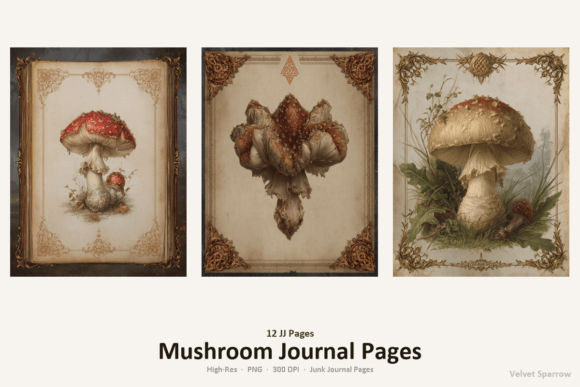
The personality of these pages is rooted in a vintage, tactile aesthetic. Think of the subtle grit of aged parchment, the faint, ghosted impressions of botanical sketches, and the warm, muted color palettes that evoke a sense of history. The visual style avoids modern, clean lines in favor of organic irregularities and distressed details. This isn't about sterile perfection; it's about embracing the beauty of wear and the stories embedded in texture. The overall appeal is one of quiet sophistication and nostalgic warmth, making it an excellent creative font alternative for projects where a typeface might feel too digital or cold.
As a display font for visual elements, its strength lies in setting a mood rather than conveying long blocks of text. The aged details and vintage textures are designed to hold their integrity at various print sizes, ensuring your project maintains its character whether it's a small planner insert or a large scrapbook background. This kind of robust, layered design is reminiscent of a well-crafted serif font—it has structure, weight, and a timeless quality that commands attention without shouting.
Practical Applications Across Creative Disciplines
The true value of Mushroom Journal Pages is unlocked in their application. For the junk journaler, they become the backbone of signatures and booklets, providing ready-made, interesting backgrounds that invite layering with ephemera, stamps, and handwritten notes. In scrapbooking, they serve as rich, textured page backgrounds that can ground a layout and add instant depth, or as accent pieces cut into shapes for embellishment.
For artists and mixed-media creators, these pages are ideal foundational layers. They add a complex, non-repeating texture that can be painted over, collaged upon, or used as a subtle underlayer that peeks through subsequent work. This approach aligns with modern typography and design thinking, where background elements play a crucial role in establishing visual hierarchy and interest. Consider using them in:
- Altered Book and Decoupage Projects: The print-ready PDF sheets can be torn, mod-podged, and integrated directly into book covers or wooden substrates, adding instant vintage character.
- Planner Dashboards and Pocket Pages: The letter-size format is perfect for creating functional and beautiful planner accessories, turning a utilitarian item into a personal keepsake.
- Memory Keeping and Photo Book Pages: They provide a cohesive, story-rich backdrop for photos and journaling, elevating a simple photo book into a curated editorial design piece.
- Handmade Journal and Notebook Covers: Printing on cardstock and laminating or sealing the result can produce a durable, custom cover for a traveler's notebook or a sketchbook, making your brand identity as a maker uniquely tangible.
Making the Most of Your Digital Download
Approaching this resource with a strategic mindset will yield the best results. First, evaluate the project's fit. The inherent style of Mushroom Journal Pages leans toward the organic, historical, and handmade. It pairs naturally with handwritten font styles, classic serif font typefaces for formal titling, or even a simple, clean sans serif font for contrast and readability in accompanying text. Avoid pairing it with overly geometric or futuristic fonts, as this can create a jarring disconnect.
Treat these pages as you would a premium font family—review the included styles. The collection offers a mix of page designs meant to interact and layer. Some may be more text-heavy, others more graphic. Plan your layers. Use a more intricate page as a background, a simpler one for a journaling block, and perhaps a third with a distinct motif as a focal accent. This creates a cohesive visual narrative within your project.
Readability is key, even in visual projects. If you're using a page as a background for your own writing, consider adding a vellum overlay or a lightly tinted cardstock mat to ensure your text remains legible against the vintage textures. This is a practical application of visual hierarchy—ensuring the most important information (your words, your photos) remains clear and accessible.
Finally, understand the scope of your use. As a digital download, this resource is designed for personal and commercial project use. This means you can confidently use these pages in items you create for sale—be it in an Etsy shop, at a craft fair, or as part of a client project. This flexibility makes it a valuable asset for small business owners, designers, and publishers looking to incorporate unique, handmade textures into their work without the cost of custom illustration or photography.
In essence, Mushroom Journal Pages are less a single product and more a starting point for a thousand different creative journeys. They provide the rich, textured canvas upon which you can build your own stories, designs, and brand identity, making them a worthy addition to any creative's digital toolkit.