Wisteria Watercolor Clipart: A Designer's Guide to Botanical Beauty
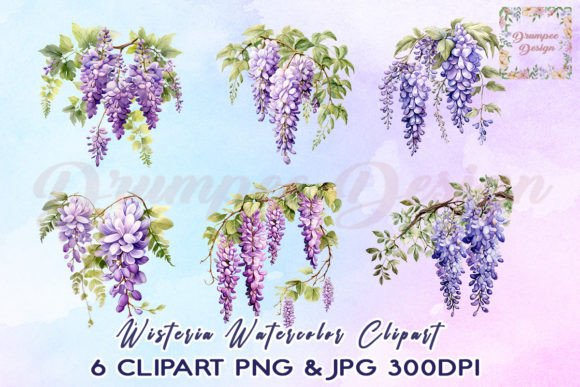
There's a reason wisteria captures our imagination. Its cascading blooms, a waterfall of soft purples, blues, and lavenders, evoke a sense of romantic elegance and fleeting beauty. Translating that organic grace into a digital asset is no small feat, but high-quality Wisteria Watercolor Clipart does exactly that. It’s not just a collection of flowers; it’s a mood, a texture, and a versatile design tool that can elevate a wide range of creative projects. As designers and creators, we’re always searching for assets that offer both beauty and practicality. This particular style of clipart, with its painterly strokes and translucent layers, provides a sophisticated visual shorthand for nature, tranquility, and artistry.
The Visual Character and Practical Appeal
What sets this watercolor style apart is its inherent softness and movement. Unlike flat vector graphics, watercolor textures have depth. You’ll see subtle variations in color saturation, the gentle bleed of one hue into another, and the fine, delicate lines of individual petals and leaves. This gives Wisteria Watercolor Clipart a personality that feels handcrafted and authentic. The overall appeal lies in its ability to add instant elegance without overwhelming a design. It can serve as a bold, central feature or a delicate, supporting accent. The provided files—high-resolution PNG and JPEG at 300 dpi—are crucial for this flexibility. The transparent PNG files are particularly valuable, allowing you to layer the wisteria seamlessly over photographs, text, or other design elements without a clumsy white box around it. This technical specification is what makes the asset truly professional-grade.
Where This Clipart Truly Shines: Real-World Applications
Understanding an asset's strengths helps you deploy it effectively. The romantic and organic nature of Wisteria Watercolor Clipart makes it a natural fit for specific projects and industries. Think beyond just slapping a flower on a page. Consider the context and the message you want to convey.
- Brand Identity and Logo Design: For businesses in the wedding industry, floral shops, boutique wellness studios, artisanal bakeries, or high-end cosmetics, this clipart can become a core part of the brand's visual language. Used as a subtle watermark, a framing element on business cards, or the main icon in a logo, it communicates quality, care, and a connection to nature. It helps build a brand identity that feels premium and thoughtful.
- Editorial and Publishing Design: In editorial design, such as magazine layouts, book covers (especially for romance, poetry, or lifestyle genres), and chapter headings, wisteria clipart can create visual interest and set the tone. A single cluster can break up long blocks of text, guiding the reader's eye and adding a moment of visual rest that feels intentional and beautiful.
- Packaging and Product Design: Imagine this artistry on product labels for soaps, candles, or gourmet teas. The watercolor effect translates beautifully to print, giving packaging a tactile, artisanal quality. For packaging design, the key is to use the clipart as an accent that complements, rather than competes with, the product information.
- Digital and Social Media Graphics: In the fast-paced world of social media graphics, a beautiful, unique visual stops the scroll. Use Wisteria Watercolor Clipart as a background for Instagram quotes, a header for Pinterest pins, or a decorative element for Facebook event covers. It adds a layer of sophistication that generic stock photos can't match.
Integrating the Asset: From Concept to Execution
Having a beautiful asset is one thing; using it well is another. Here’s how to approach integrating this design asset into your workflow for maximum impact.
Evaluate Project Fit: First, ask if the romantic, soft aesthetic aligns with your project's goals. It would be perfect for a wedding invitation suite but might feel out of place on a poster for a tech startup. The style should always support the message.
Master Font Pairing: The delicate, flowing nature of watercolor art pairs best with typefaces that offer balance. A clean, modern sans serif font can provide a beautiful contrast, grounding the floral element and ensuring readability for body text. For a more harmonious, elegant feel, a classic serif font with its own subtle details can create a cohesive look. Avoid pairing it with overly ornate script fonts or handwritten fonts, as they can compete for attention and create visual chaos. The goal is to let the wisteria be the star, with typography playing a strong supporting role.
Leverage the Technical Specs: The instructions are clear: work in RGB color mode at 300 DPI for accurate color representation, especially if your final output is digital. For print, while CMYK is the standard for professional printing, starting in RGB at 300 DPI gives you the highest quality source. Always convert to the appropriate color profile (CMYK for offset printing, RGB for digital) as the final step in your design software. The 4000x4000 px size gives you ample room to scale down for web use or crop for specific print layouts without losing quality.
Consider Commercial Licensing: This is a premium font and clipart set, meaning it comes with a license for use. For entrepreneurs and small business owners, this is critical. You are likely using these assets to create products for sale, marketing materials, or client work. The license provided with your purchase should cover these commercial font and asset uses. Always read the license terms to understand your rights and limitations, ensuring your business is protected.
A Final Thought on Creative Assets
In the end, Wisteria Watercolor Clipart is more than just a decorative element. It’s a piece of modern typography and illustration designed to solve a problem: how to inject organic, high-quality artistry into digital and print projects efficiently. By choosing assets that are technically sound and aesthetically aligned with your vision, you build a stronger, more consistent, and more professional creative output. Whether you're crafting a brand identity, designing a wedding suite, or creating engaging social media content, this kind of thoughtful design asset is what separates good work from great work. It allows you to focus on strategy and storytelling, knowing the visual foundation is both beautiful and built to perform.